
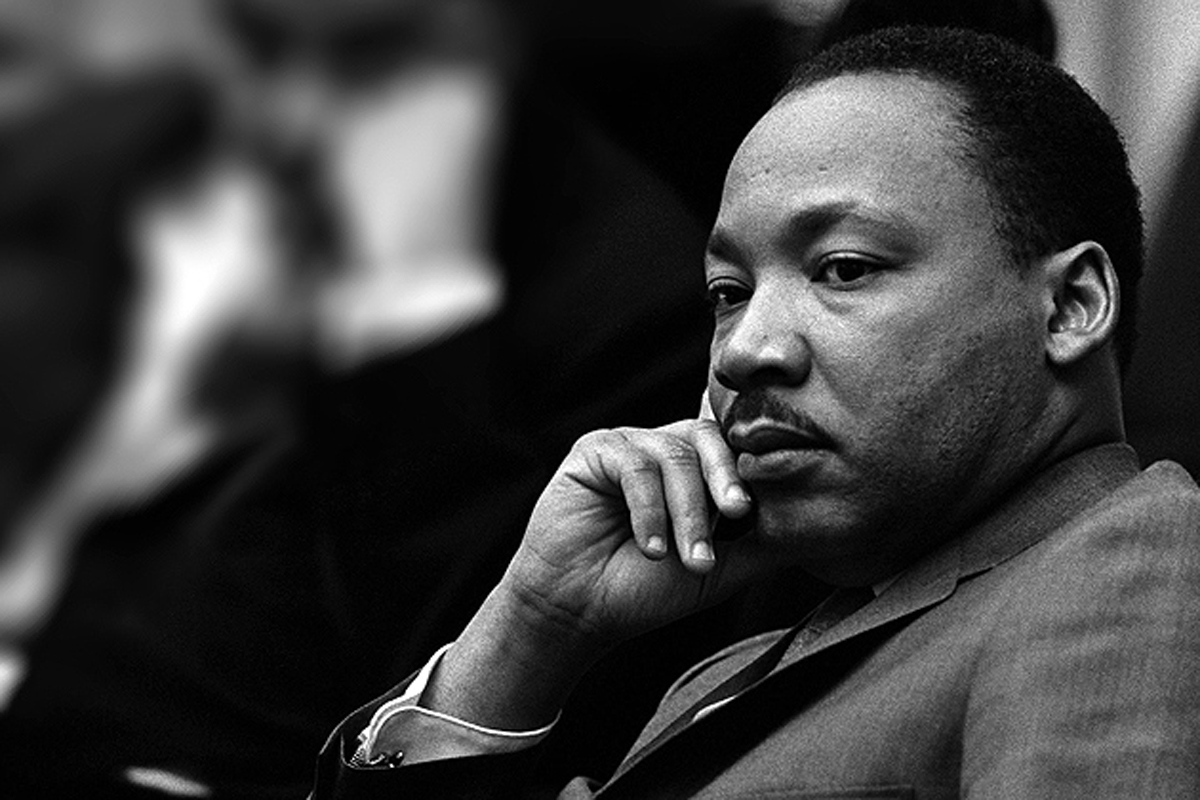
Today, the Turkish American community commemorates the life and enduring legacy of Dr. Martin Luther King, Jr., whose principled leadership and unwavering commitment to equality and justice left an indelible mark on the United States.
Dr. King consistently upheld the principles of nonviolent resistance in confronting segregation and discrimination during a period when such practices remained deeply entrenched in American society, nearly a century after the Civil War. Despite sustained opposition, including arrest and mistreatment, he remained resolute in his pursuit of justice, guided by moral conviction and the power of peaceful advocacy. Although his life was tragically cut short on April 4, 1968, his ideals continue to inspire generations.
During this era, Turkish Americans likewise demonstrated a firm commitment to the principles of equality and human dignity. The Turkish Embassy in Washington, D.C., was among the few venues where individuals of all backgrounds were welcomed and treated with respect. When proposals were made to restrict the participation of African Americans or to impose separate means of entry, Turkish Ambassador Münir Ertegün rejected such measures, affirming that all guests of the Turkish Republic would be received as equals.
As a consequence of this stance, his son, Ahmet Ertegün, was arrested in Annapolis for violating segregation laws. Ahmet Ertegün later founded Atlantic Records, where he made lasting contributions by supporting and advancing the work of African American artists and other influential voices in American culture.
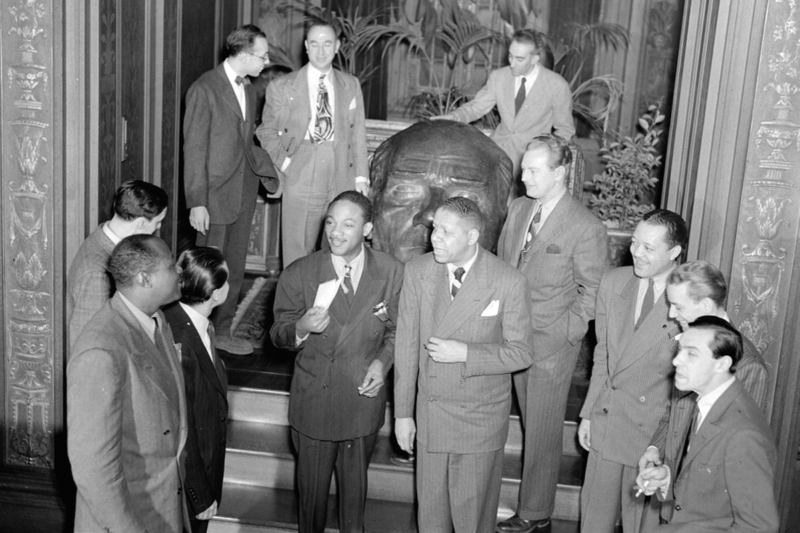
Ahmet Ertegün, clarinetist Mezz Mezzrow, pianist Art Hodes, Nesuhi Ertegün, jazz fan (and Ahmet’s future business partner) Herb Abramson, trombonist Jay Higginbotham, trumpeter Henry “Red” Allen, trombonist Lou McGarity, tenor saxophonist Lester Young, and Nesuhi and Ahmet’s cousin Sadi Koylin. The men are standing around a bust of Mustafa Kemal Atatürk, founder of the Republic of Turkiye, at the Turkish Ambassador’s Residence (1940). Photo by William P. Gottlieb. William P. Gottlieb Collection, courtesy Prints and Photographs Division, Library of Congress. Dr. Martin King – Photo by Yoichi Okamoto via Wikicommons. (1966)